Getting started
The best first animal is the one you actually want.
Ask about a first reptile or a first tarantula and the same three names come back almost every time. Here is what they are worth, and what to check the animal you really want against.
Corn snake, ball python, Brachypelma: the three usual answers
Ask a forum or a specialist shop for a beginner animal and these are the names you hear.
- Corn snake
- The standard answer for snakes. It feeds reliably, is often out in the open and forgives most beginner mistakes. A grown one reaches about 1.5 metres.
- Ball python
- Named almost as often. Calm and heavy-bodied. In return a ball python sometimes stops eating for weeks, and that unsettles somebody new in particular.
- Brachypelma
- With tarantulas it is nearly always this genus: ground-dwelling, calm and long-lived. We do not keep one ourselves.
All three forgive mistakes, and that is why they are recommended. Whether you will gladly look after one of them for 20 years is something the recommendation cannot tell you.
“Nobody gets a dog when it is cats they love.”
With dogs and cats everybody sees it. With exotics we do it anyway: somebody wants a gecko and buys a corn snake because it counts as a beginner animal. We believe that an animal you are really interested in is one you still look after gladly in its third year. So we start with what you want, and then check it.
Watch the video on YouTube (in German)Three questions for the animal you want: space, warmth, time
One limit first: no dangerously venomous animal
Dangerously venomous animals are not for somebody starting out. A mistake there lands on you or on somebody in your household. The law comes on top: several German states ban keeping dangerous animals privately or allow it only with a permit. Ask the responsible authority before you buy.
Space
Plan the enclosure for the grown animal. The juvenile from the shop is considerably larger in a few years, and what looks generous today is too small by then. Measure where it can stand in your home first.
The right warmth
Reptiles and spiders make no body heat of their own. Every species needs its temperature range, and many lizards need UV light as well. That means equipment and a running electricity bill. And you need somebody to look in while you are away.
Time, often more than 20 years
This is how old the animals in this article can get:
- Corn snake
- over 20 years
- Ball python
- over 20 years, single animals over 40
- Brachypelma, females
- around 25 years
- Bearded dragon
- 8 to 12 years
Expect to move house in that time, with the animal coming along.
If the animal you want passes these three questions and is not dangerously venomous, it is the right first animal for you, even when no beginner list names it.
Our first animal was a bearded dragon
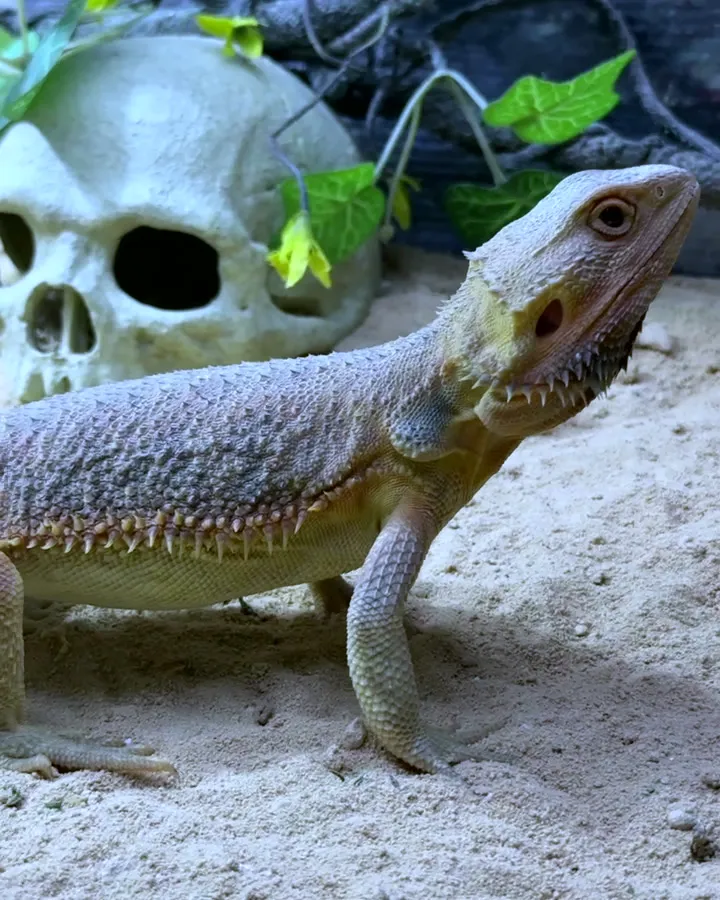
“My first reptile was Murph, a very sweet bearded dragon,” Philipp says in the video. Murph appears in it, and so do Byte the corn snake and the tarantulas Zero and Krümmel. Neither of the two is a Brachypelma.
Before you buy: proof of origin and reporting duty
Many popular species are protected, the ball python and the Brachypelma tarantulas among them. In Germany, have the seller hand you a proof of origin with the animal. Whether you also have to report it to the authority depends on the species.
Ask the seller as well what the animal has been eating and when it last shed.
Questions about a first animal
- Which reptile is suitable for beginners?
- Corn snake and ball python are the names you usually hear, and the bearded dragon among lizards. Our answer: take the animal you actually want, as long as it is not dangerously venomous and you can give it space, the right warmth and the years it needs.
- Corn snake or ball python: which is the better first snake?
- The corn snake is more active and feeds more reliably. The ball python is calmer but sometimes stops eating for weeks. Take the one you would rather see every day.
- Which tarantula is suitable for beginners?
- The genus Brachypelma is usually recommended: ground-dwelling, calm and long-lived. The species of this genus are protected, so in Germany have the seller hand you a proof of origin.
- How old do exotic pets get?
- Older than many expect. A corn snake can live past 20, and so can a ball python, with single animals past 40. Female Brachypelma reach around 25 years, bearded dragons 8 to 12 on average.
- May I keep a venomous snake as a beginner?
- We advise against it. Several German states also ban keeping dangerous animals privately or allow it only with a permit. The responsible authority where you live can tell you.
This is our experience as keepers. It replaces neither the care guide for a single species nor a vet or the word of your authority.

Whatever it turns out to be: start the record on day one
Keep track of what your animal eats, what it weighs and when it sheds. The record stays with the animal, even if it changes keepers one day.